
- By Admin
What is Black Business Empowerment in South Africa? Understanding BBE, BEE, B-BBEE, Women Empowerment and Economic Transformation
South Africa's economy has undergone significant transformation since the dawn of democracy in 1994. One of the country's primary goals has been to create a more inclusive economy that provides meaningful opportunities for individuals and communities that were historically excluded from participating fully in business and economic activities.
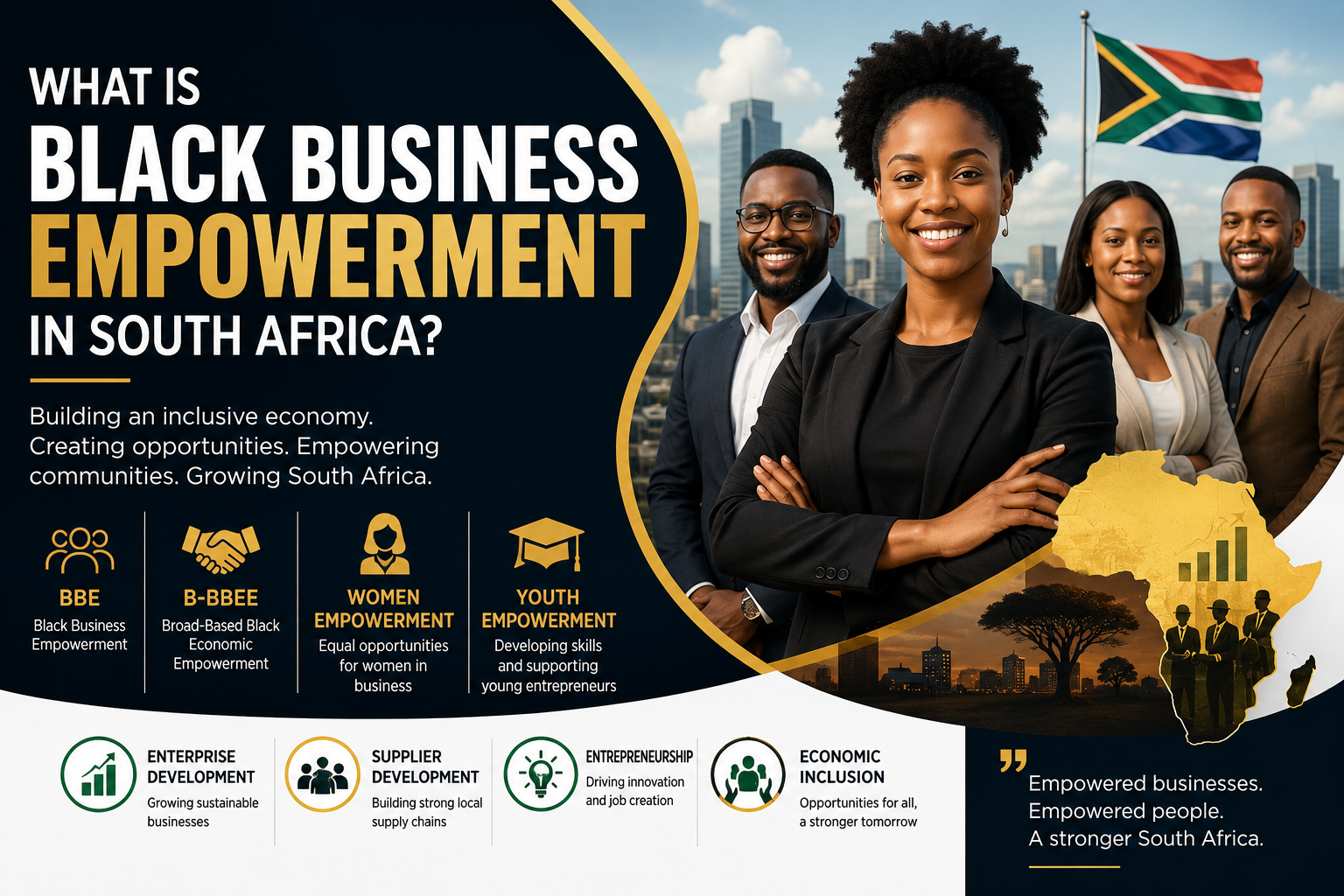
Terms such as Black Business Empowerment (BBE), Broad-Based Black Economic Empowerment (B-BBEE), Women Empowerment, Youth Empowerment, and Enterprise Development are frequently used by government, businesses, investors, and entrepreneurs. However, many people are still unsure about what these concepts actually mean and how they contribute to South Africa's economic growth.
In this guide, we explain these concepts in simple terms and show why they remain important for building a stronger and more inclusive economy.
What is Black Business Empowerment (BBE)?
Black Business Empowerment (BBE) refers to initiatives aimed at increasing the participation of Black South Africans in business ownership, management, entrepreneurship, procurement, and wealth creation.
The objective is not merely to create businesses owned by Black entrepreneurs but to ensure that these businesses become sustainable, competitive, and capable of creating employment opportunities while contributing to economic development.
Black Business Empowerment encourages:
-
Business ownership
-
Entrepreneurship
-
Skills development
-
Access to funding
-
Access to markets
-
Participation in government and private sector procurement
-
Business networking and collaboration
Today, many organisations actively support Black-owned businesses through supplier development programmes, mentorship, access to finance, and procurement opportunities.
Learn more about discovering and promoting Black-owned businesses through the BBGI Business Directory.
What is Broad-Based Black Economic Empowerment (B-BBEE)?
Broad-Based Black Economic Empowerment (B-BBEE) is South Africa's official policy framework designed to promote economic transformation and increase the meaningful participation of Black people in the economy.
Unlike the earlier Black Economic Empowerment (BEE) initiatives, B-BBEE adopts a broader approach that benefits not only business owners but also employees, communities, suppliers, and future entrepreneurs.
The B-BBEE framework evaluates organisations across several key areas, including:
-
Ownership
-
Management Control
-
Skills Development
-
Enterprise and Supplier Development
-
Socio-Economic Development
Companies receive a B-BBEE status level based on their performance against these elements. A stronger B-BBEE rating often improves competitiveness when tendering for government contracts and when working with corporate organisations that prioritise transformation within their supply chains.
BEE vs B-BBEE: What is the Difference?
Although the two terms are often used interchangeably, they are not exactly the same.
Black Economic Empowerment (BEE) primarily focused on ownership and management participation by Black South Africans.
Broad-Based Black Economic Empowerment (B-BBEE) expanded the approach by recognising that sustainable transformation requires investment in education, skills development, supplier development, employment, community development, and inclusive economic participation.
This broader framework helps ensure that the benefits of transformation reach more people rather than focusing solely on ownership structures.
Why Does Economic Empowerment Matter?
Economic empowerment creates opportunities that extend beyond individual businesses.
Successful empowerment initiatives contribute to:
-
Job creation
-
Poverty reduction
-
Increased entrepreneurship
-
Local economic development
-
Skills transfer
-
Innovation
-
Reduced inequality
-
Sustainable communities
When small and medium enterprises grow, they create employment opportunities, stimulate local economies, and strengthen South Africa's overall economic resilience.
Women Empowerment in Business
Women Empowerment focuses on creating equal opportunities for women to participate fully in economic activities, leadership, entrepreneurship, and business ownership.
Historically, women have faced barriers to accessing finance, leadership positions, and entrepreneurial opportunities. Today, many public and private sector programmes seek to address these challenges.
Women empowerment initiatives often support:
-
Women-owned businesses
-
Female entrepreneurs
-
Leadership development
-
Access to finance
-
Business mentorship
-
Procurement opportunities
-
Professional networking
-
Skills development
Increasing women's participation in the economy contributes to stronger businesses, improved household incomes, and more inclusive economic growth.
Youth Empowerment
South Africa has one of the youngest populations in the world, making youth development essential for long-term economic success.
Youth empowerment focuses on equipping young people with the education, practical skills, entrepreneurial support, and financial opportunities needed to build successful careers and businesses.
Key areas include:
-
Entrepreneurship training
-
Business incubation
-
Digital skills
-
Innovation
-
Start-up funding
-
Internship programmes
-
Graduate development
-
Mentorship
Supporting young entrepreneurs encourages innovation while reducing unemployment.
Enterprise Development
Enterprise Development involves supporting small and emerging businesses so that they can become sustainable suppliers, employers, and contributors to the economy.
Support may include:
-
Business mentorship
-
Funding assistance
-
Business coaching
-
Market access
-
Technology support
-
Capacity building
-
Networking opportunities
Enterprise Development is one of the most effective ways to grow South Africa's small business sector while creating long-term employment.
Supplier Development
Supplier Development helps small businesses become competitive suppliers capable of meeting the standards required by larger organisations.
Support often includes:
-
Product development
-
Financial support
-
Operational improvements
-
Quality management
-
Compliance assistance
-
Market access
-
Procurement opportunities
Strong supplier development programmes create resilient local supply chains while promoting inclusive economic participation.
The Role of Entrepreneurship
Entrepreneurship remains one of the most powerful drivers of economic empowerment.
Every successful business creates value through:
-
Employment
-
Innovation
-
Tax revenue
-
Skills transfer
-
Community investment
-
Economic growth
Entrepreneurs play an important role in solving social and economic challenges while creating opportunities for future generations.
How BBGI Supports Economic Empowerment
The Black Business Growth Initiative (BBGI) is committed to helping entrepreneurs, professionals, and organisations connect, collaborate, and grow.
Through its digital ecosystem, BBGI provides opportunities to:
-
Promote businesses
-
Increase online visibility
-
Connect with customers
-
Discover business opportunities
-
Publish business articles
-
Participate in networking events
-
Access educational resources
-
Build strategic partnerships
Whether you are launching a new business, expanding an existing enterprise, or looking to connect with other professionals, BBGI provides a platform that supports sustainable business growth across South Africa.
Final Thoughts
Black Business Empowerment is not simply about ownership—it is about creating an economy where opportunities are accessible to everyone regardless of historical disadvantage.
Broad-Based Black Economic Empowerment, Women Empowerment, Youth Development, Enterprise Development, and Supplier Development all work together to build a stronger, more competitive, and more inclusive South African economy.
As entrepreneurs, professionals, investors, government institutions, and communities continue working together, South Africa moves closer to achieving sustainable economic growth that benefits current and future generations.
Economic empowerment is ultimately about creating opportunities, building businesses, developing skills, and ensuring that every South African has the opportunity to participate meaningfully in the country's economic future.
Latest Posts
-
-
Dec. 3, 2025, 11 p.m. Alakhe Group Holdings: Building Sustainable Solutions for South Africa’s Future
-

Oct. 19, 2024, 12:51 p.m. Entrepreneur Lessons: When marketing outruns service delivery readiness
-

Aug. 6, 2024, 10:10 p.m. One hand can feed another”…a look at the phenomenon
-

Aug. 6, 2024, 10:07 p.m. Black Business Growth Initiative Calls for Unity, Heritage